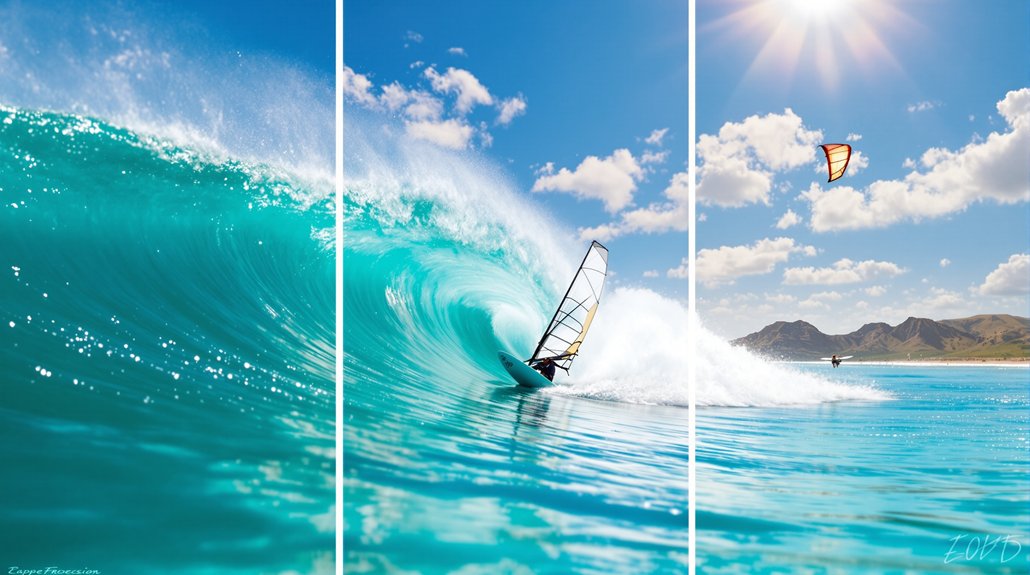
You’ll love Sal’s turquoise waters, where a gentle 12–15 kt morning breeze lets you wing‑foil like a futuristic hoverboard, while the 18–22 kt midday gusts crank up kitesurfing thrills and 15–18 kt afternoons give windsurfing solid control. A three‑day crash course can teach you basics, safety, and a few tricks, but true mastery needs more practice and a good coach to handle the 7–9 m kite, wide board, helmet, and harness. Stick to flag warnings, pack a light wetsuit, and you’ll be cruising safely—keep going for deeper tips.
Ever wondered which water‑sport will give you the best buzz on Sal’s breezy shores? You’ll find that the island’s beach locations and Sal winds make every option tempting, but each delivers a different thrill.
Ever wondered which water‑sport will give you the best buzz on Sal’s breezy shores?
Kitesurfing lets you soar like a gull, feeling the gusts pull you across the turquoise.
Windsurfing feels more grounded, letting you slice through waves while the wind pushes you forward.
Wing‑foiling offers a futuristic vibe, hovering just above water, almost floating.
If you crave pure speed, the kite’s lift will satisfy you; if you prefer steady control, the board’s rudder will keep you steady.
And if you want a blend of both, the wing’s lift offers a middle ground.
Pack a light wetsuit, stay safe, and let the wind decide your adventure. For a deeper understanding of Sal’s unique geography and climate that make these sports possible, consider booking a guided tour with a local to explore the island’s natural landmarks and coastal features.
Ride the rhythm, respect the power, and let freedom guide you. Always check flag warnings and beach conditions before heading out to ensure safe water conditions for your chosen water sport.
So, you can really become a kitesurfing (or windsurfing, wing‑foiling) pro in just three days? You’ll feel the wind on your skin, the splash of the ocean, and the rush of freedom, but mastery timelines demand realistic expectations. A crash‑course with high coaching intensity can teach you basics, safety, and a few tricks, yet true skill takes practice. Consider pairing your water sports training with a private local tour guide to explore Sal’s ecological sites and wildlife between sessions.
| Day | Focus | Goal |
|---|---|---|
| 1 | Gear & safety | Confident launch |
| 2 | Balance & control | Stable ride |
| 3 | Turn & transition | Smooth maneuvers |
| 4 | Speed & style | Personal flair |
| 5 | Review & refine | Consistent flow |
You’ll leave with solid fundamentals, enough to chase the wind on Sal’s beaches, but don’t expect Olympic medals yet. Enjoy the ride, stay safe, and let the sea keep you humble.
A good kitesurfing setup starts with a sturdy kite, a reliable control bar, and a board that fits your size and skill level. You’ll feel the Atlantic wind push you, but you also need solid kitesurf equipment and coaching safety basics. Let’s break it down:
Grab a local coach, practice in shallow water, and respect the wind’s power. Sal Rei offers excellent opportunities to engage with community instructors who understand the island’s unique wind conditions and can accelerate your learning curve. You’ll laugh at your early wobble, then soar with confidence.
You need a short‑term visa or visa‑free entry if your passport allows; bring a valid passport, return ticket, proof of accommodation, and enough funds. Complete the entry paperwork before landing.
Boldly, you’ll find minimal age restrictions for beginners, though most schools set a twelve‑year baseline for safety. Embrace freedom, respect beginner safety guidelines, and let the wind welcome you.
You can bring your own gear if you prefer, but rental options are plentiful on Sal, giving you the freedom to choose what feels best without hassle.
You’ll feel right at home—our guides speak English fluently, and the equipment policy lets you bring your own gear or rent locally, giving you the freedom to chase the wind on your terms.
You’ll find calm seas and milder winds in Cape Verde’s late‑spring season, especially May and early June, when trade‑wind strength eases and water smoothness peaks, perfect for relaxed water‑sport adventures.
 Spanish
  English
  Portuguese
  French
  Italian