
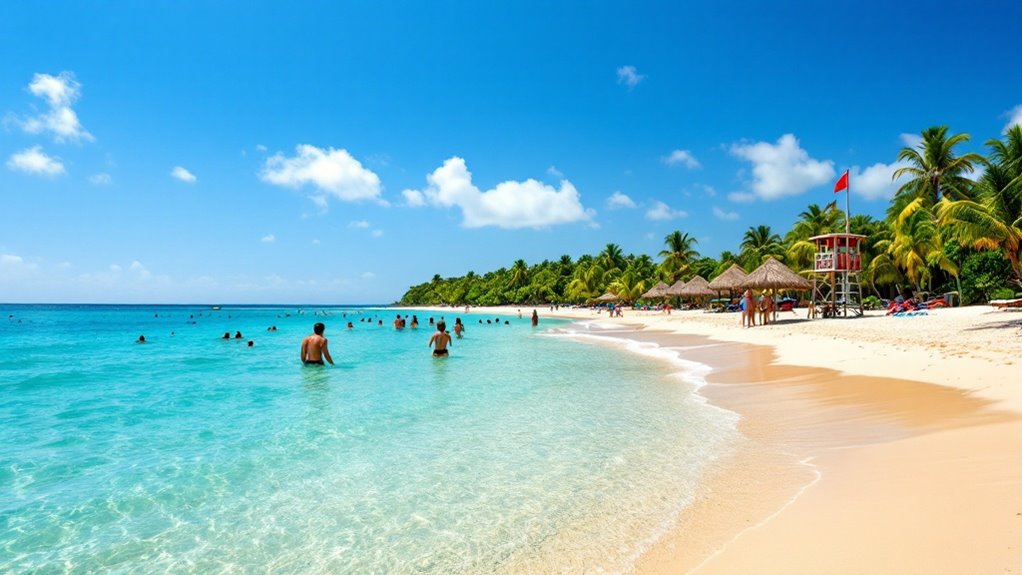
You can definitely swim in Cape Verde’s seas, and it’s generally safe when you follow local guidelines. The best swimming time is from May to September, when the waters are calmer and more inviting. Popular beaches like Santa Maria Beach and Estoril Beach offer lifeguard supervision and ideal conditions for a rejuvenating dip. You’ll want to pay attention to the beach safety flags (green, yellow, or red) and stick to designated swimming areas. While marine life like sea turtles adds to the experience, it’s smart to know about potential hazards and local safety measures before jumping in.
When it comes to swimming in Cape Verde’s waters, you’ll need to pay close attention to the local sea conditions. The islands’ swimming conditions can change dramatically from one beach to another, and what’s calm in the morning might get choppy by afternoon.
You’ll want to time your aquatic adventures just right, and the best time for a dip is between May and September. During these months, the winds calm down, and the sea conditions become much more inviting for swimmers of all levels.
Keep your eyes peeled for those beach safety flags – they’re your best friends out there! Green means you’re good to go, yellow suggests you should watch your step, and red flags? Well, let’s just say it’s a perfect day for beach volleyball instead.
Don’t let the stunning views fool you – even experienced swimmers need to respect the strong currents that Cape Verde is known for. Stick to designated areas where lifeguards keep watch, and avoid spots like Santa Monica Beach where swimming isn’t recommended. For marine wildlife enthusiasts, Sao Vicente offers swimming and snorkeling with sea turtles.
Paradise awaits at Cape Verde’s best swimming beaches, where crystal-clear waters and safe conditions make ocean dips a dream come true.
You’ll find your perfect spot at Santa Maria Beach on Sal, where lifeguards keep watch and the pier area offers wonderfully calm waters for a relaxing swim. Boa Vista’s beaches are also popular destinations for safe swimming.
If you’re heading to Boa Vista, you won’t want to miss Estoril Beach, where safe swimming conditions and watchful lifeguards create the perfect environment for your ocean adventures.
Over on Santiago, Tarrafal Beach beckons with its tranquil waters – and you can reward yourself with a revitalizing drink at one of the local beach bars afterward.
For those who prefer their swimming with an extra dose of protection, Bikini Beach on Sal’s got you covered with its clever breakwaters that keep the strong waves at bay.
And don’t overlook Laginha Beach on São Vicente, where you’ll find some of the clearest waters in the Cape Verde islands, complete with lifeguard supervision.
Each of these beaches offers its own unique charm while maintaining the safety standards you’re looking for in a swimming destination.
Understanding Cape Verde’s seasonal water patterns is essential for safe swimming throughout the year. You’ll find the best swimming conditions from May to September when the sea is calmer and more inviting. During these months, you can enjoy average sea temperatures between 23-27°C, perfect for spending hours in the crystal-clear waters.
Watch out for the windy season, though, which kicks in from late November to March. The sea conditions can get quite choppy during this time, and you’ll notice more red and amber flag warnings at the beaches.
Don’t worry too much – most hotel beaches have got you covered with professional lifeguards keeping watch, especially during busy tourist periods. They’re there to make sure you’re having fun while staying safe! There are also snorkeling tours with sea turtles available in São Vicente for 5,840 CVE.
Make it a habit to check the flag warnings and local beach conditions before diving in, as things can change pretty quickly in Cape Verde. The good news is that even during the windier months, you’ll still find plenty of protected bays where you can take a revitalizing dip – just be smart about where and when you choose to swim.
You’ll quickly learn the beach flag system in Cape Verde, where red means stay out of the water, yellow signals caution, and green gives you the all-clear to swim.
The flags can change throughout the day as sea conditions shift, so it’s smart to check them each time you head to the beach, even if you’ve already been swimming earlier.
When lifeguards are present, they’ll update the flags and might use additional warning signals, like whistles or hand gestures, to keep you safe in the crystal-clear waters.
When swimming in Cape Verde’s pristine waters, you’ll need to familiarize yourself with the local beach flag system. It’s a straightforward three-color system that’ll keep you informed about sea conditions and help you make smart decisions about when to take a dip.
Think of these flags as your personal safety traffic lights. When you spot a green flag, you’re good to go – the water conditions are ideal for swimming and splashing around.
Yellow flags are your cue to proceed with caution, as there might be moderate risks like stronger currents or changing tides.
Red flags are your absolute stop signal – when these are flying, don’t even think about getting in the water, no matter how tempting it looks.
If you’re at a beach without lifeguards or flag systems, you’ll need to be extra vigilant. Take time to assess the water conditions yourself and chat with locals who know the area well.
Throughout the day, Cape Verde’s beach flags can shift from green to yellow or red as weather patterns and ocean conditions evolve.
You’ll want to keep an eye on these flag systems since they’re your best indicator of whether it’s safe to swim in the pristine Cape Verde sea.
Don’t assume that yesterday’s perfect swimming conditions will carry over to today. The local lifeguards update these flags regularly, sometimes multiple times per day, based on changing tides, winds, and currents.
When you spot a yellow flag replacing a green one, it’s your cue to swim with extra caution, while a red flag means it’s time to stick to beach activities instead.
Before you head out for your daily swim, make a quick check with the hotel lifeguards – they’re your go-to experts for the latest safety updates.
They’ll tell you if those morning waves are just right for an invigorating dip or if you should wait until conditions improve.
Cape Verde’s flag warning system serves as an indispensable safety guide for beachgoers. When you’re ready to plunge into those crystal-clear waters, you’ll need to understand how lifeguards communicate beach conditions through these crucial signals.
At most hotel beaches, trained professionals monitor the flag systems and update them based on local conditions throughout the day.
Here’s what you need to know about the flag warning system:
While you’re swimming in Cape Verde’s beautiful waters, you’ll want to keep an eye out for some interesting neighbors, including Portuguese Man O’War and spiky sea urchins.
Though sharks aren’t a major concern in the swimming areas, it’s smart to know which creatures call these waters home and how to avoid unwanted meetings with them.
You’ll be glad to know that most marine encounters are perfectly safe, but keeping some basic first aid knowledge handy, like rinsing stings with seawater, can make your ocean adventures much more comfortable.
The Atlantic waters surrounding these islands teem with diverse marine life, from colorful tropical fish to graceful sea turtles and manta rays. When you’re swimming or diving in Cape Verde, you’ll discover a vibrant underwater world that’s both exciting and mesmerizing. The nutrient-rich waters support thriving coral reefs, creating perfect habitats for countless marine species.
While you’re exploring these crystal-clear waters, you’ll likely encounter:
Remember that while most marine life you’ll encounter is harmless, it’s crucial to maintain a respectful distance. You’ll want to watch out for Portuguese Man O’War and sea urchins, which can deliver uncomfortable stings.
Don’t let this deter you though – with basic awareness and common sense, you’ll have an incredible time discovering Cape Verde’s underwater treasures. The ocean activities here offer unforgettable experiences, and the marine biodiversity makes every swim an adventure.
Despite the stunning marine life you’ll encounter, it’s important to understand potential hazards beneath Cape Verde’s azure waters. One of the most notable concerns is the Portuguese Man O’War, which can deliver painful stings that might send you racing for the first aid kit instead of your camera.
You’ll want to watch your step in rocky areas, where sea urchins love to hang out – these spiky fellows can turn your beach day into a less-than-pleasant memory if you accidentally step on them.
While Cape Verdean waters are generally safe for swimming, it’s smart to stay informed about what’s beneath the surface.
Don’t let these precautions scare you away from enjoying the water, though! Sharks typically keep to deeper waters, and you’re unlikely to encounter them near the beaches where most swimming takes place.
Your best bet for a worry-free experience is to check with local guides or beach authorities before diving in. They’ll know which areas are safest for swimming and can give you up-to-date information about marine life in the area. A little awareness goes a long way in keeping your ocean adventures fun and safe!
Savvy swimmers in Cape Verde’s waters know that preventing marine stings starts with preparation. The region’s marine ecosystem hosts some fascinating but potentially hazardous species, like the Portuguese Man O’War and sea urchins, that you’ll want to avoid during your aquatic adventures.
Before diving in, you’ll need to understand the local marine hazards and take proper precautions.
Here are your essential steps for avoiding marine stings in Cape Verde:
With these safety measures in place, you can focus on enjoying Cape Verde’s beautiful waters rather than worrying about unexpected encounters with its spiky or stinging residents.
Prior to swimming in Cape Verde’s waters, you’ll want to familiarize yourself with local emergency services and medical support options. The emergency number for ambulance service is 130, and you should save this in your phone right away. While the major towns offer reliable medical facilities, it’s smart to check out the nearest clinic to your swimming spot before diving in. Cape Verde’s water activities include a variety of options like snorkeling, diving, and boat rentals.
| Service Type | Availability | What You Should Know |
|---|---|---|
| Ambulance | 24/7 | Dial 130 |
| Hospital Care | Major Towns | Limited in remote areas |
| Resort Medical | Select Properties | Ask about on-site support |
| Travel Insurance | Your Choice | Essential for evacuation |
Don’t let medical considerations dampen your swimming adventure, but do be prepared. Many hotels offer on-site medical support or can quickly connect you with local clinics if needed. The smartest move you can make is getting extensive travel insurance that covers both medical emergencies and potential evacuation – think of it as your safety net while you’re enjoying those beautiful Atlantic waters. Keep in mind that prompt care is available, though services might be more basic than what you’re used to back home.
Cape Verde’s diverse landscape offers far more than just ocean swimming for water enthusiasts. You’ll find exciting alternatives that let you explore the archipelago’s waters in different ways, from relaxing natural pools to thrilling boat excursions.
Here are your top swimming alternatives in Cape Verde:
For a memorable swimming experience, head to Ribeira das Pratas, where you’ll find beautiful natural pools nestled along the coastline.
While the archipelago boasts countless beaches, several swimming spots stand out for their safety and accessibility.
If you’re looking for calmer waters, you’ll love Santa Maria Beach on Sal Island, where the pier area provides excellent swimming conditions with lifeguards keeping watch. Just down the coast, Bikini Beach offers a sheltered swimming zone within breakwaters, perfect for those who prefer more controlled conditions.
For a peaceful dip, head to Estoril Beach on Boa Vista – though you’ll need to be mindful since there aren’t any lifeguards on duty.
Over on Santiago Island, Tarrafal Beach combines tranquil swimming conditions with lively beach bars, making it ideal for alternating between invigorating swims and cool drinks.
If you’re visiting São Vicente, don’t miss Laginha Beach, where clear waters and lifeguard presence create the perfect environment for safe swimming. The crystal-clear waters in Cape Verde’s beaches are also ideal for snorkeling and diving.
Swimming safely in Cape Verde’s waters requires understanding and following key precautions. The beach flag system is your best friend here – always check those flags before diving in! A red flag means stay out, yellow suggests caution, and green gives you the go-ahead for safe swimming conditions.
You’ll want to keep an eye on local lifeguards and resort staff, as they’re your go-to experts on current sea conditions.
For additional safety, familiarize yourself with the [equipment rental options available through local tour providers.
With 23-27°C water temperatures, you’ll find safe swimming at Cape Verde’s beaches. Just check beach conditions, follow local guidelines, and swim where there’s lifeguard presence during May-September’s calmer seas.
You won’t encounter sea snakes in Cape Verde as they’re not part of the local wildlife. These species mainly inhabit Indo-Pacific waters, so you can enjoy snorkeling and swimming without worrying about snake encounters.
Life’s a beach, and you’ll find your paradise at Santa Maria Beach on Sal. Its calm waters, lifeguard protection, and perfect swimming conditions make it the best spot for splashing in Cape Verde’s warm seas.
You’ll find Cape Verde quite safe with low crime rates. Follow basic precautions, respect local customs, and you’re free to explore. Emergency services are reliable, though transportation between islands requires planning.
 English
  Portuguese
  French
  Spanish
  Italian